
Supported Movement Sessions
Gentle, individual movement support to help you stay mobile, capable and confident.
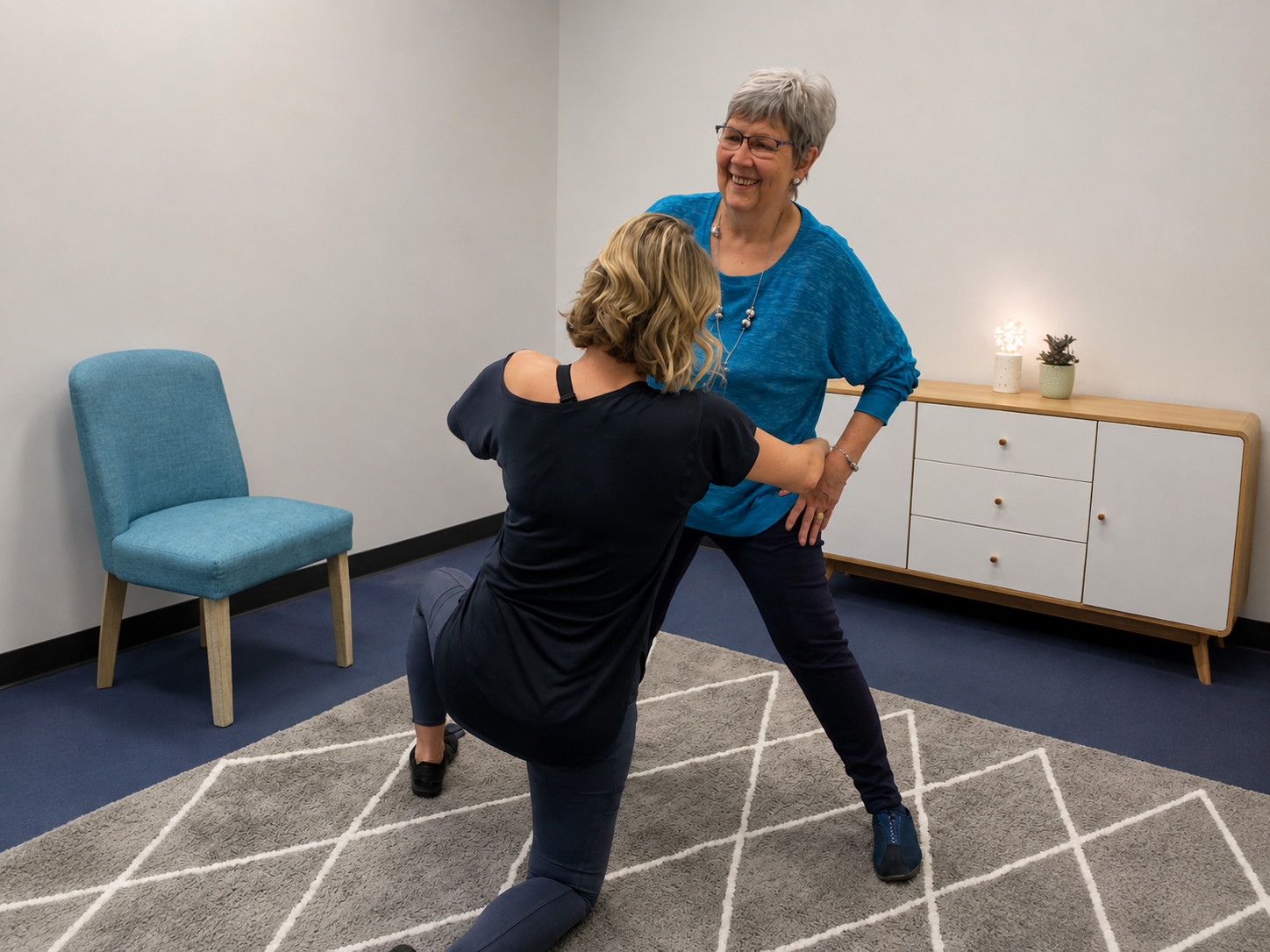
Supported Movement Sessions are designed for older adults and people living with health or neurological conditions who may need additional time, attention and assistance to keep their bodies moving.
These sessions aren't about traditional fitness or pushing physical limits. The focus is on maintaining and, where possible, improving the movements that matter in everyday life — walking, standing, sitting, reaching, turning, balancing and getting safely up and down.
Sessions are adapted to the individual's abilities and may be suitable as supportive movement for people living with conditions such as Parkinson's disease or dementia, including Alzheimer's disease, as well as those experiencing reduced mobility, balance difficulties, deconditioning or a loss of confidence with movement.
What we may work on
- Walking & gait — practising comfortable, purposeful walking and changes of direction
- Balance & stability — building confidence when standing and moving
- Strength for everyday life — supporting activities such as getting out of a chair, climbing steps and carrying everyday items
- Mobility — keeping joints and the body moving through comfortable, appropriate ranges
- Coordination & proprioception — helping maintain awareness and control of the body during movement
- Foot function — supporting stability, weight transfer and connection with the ground
- Functional movement — practising movements that relate directly to everyday activities
- Getting up & down — where appropriate, maintaining the ability and confidence to change levels and move towards and away from the floor
These sessions provide additional assistance, repeat movements when needed and adapt the session from day to day depending on how the person is feeling and moving.
Where someone is under the care of a GP, physiotherapist, occupational therapist or other health professional, these sessions can also complement their clinical care, helping them practise movement and maintain activity between appointments.
The goal is simple: to help people keep moving, maintain as much independence as possible and continue participating in everyday life.